I joined at Yeti Casino six months ago, drawn by its standing among UK players for a sleek interface and swift payouts https://yetticasino.com/. What I did not foresee was how much the scroll behavior would affect my daily sessions. I employ a mid-range Windows laptop with Chrome and an iPhone 13 with Safari, and I switch between them constantly. Right from the initial visit, I spotted the homepage rendered almost entirely above the fold, yet a soft nudge of the mouse wheel exposed a sticky header that accompanies you down. The hero banner does not hijack the scroll; it fades smoothly into a grid of highlighted games. There is not any jarring jump or forced animation. That small element made me think the site valued my control, something I have seldom found on other casino platforms where aggressive parallax effects or auto-playing videos often wrestle the scroll away from the user. It established a functional tone that I wished to delve into further.
FAQ
Does Yeti Casino use infinite scroll in all game categories?
Yes, the video slots and table games sections use infinite scroll that loads additional games as you near the lower part of the list. Live casino areas also use a continuous scroll, but video preview thumbnails halt when they move out of the viewport to maintain performance. The search results page lacks infinite scroll; it shows all matching games at once, which avoids unnecessary loading when you are searching for a specific title.
Why do game thumbnails sometimes load slowly while scrolling?
Thumbnail loading speed depends on your connection stability and device. Yeti Casino uses lazy loading with lightweight placeholder shimmers to preserve layout stability. On slower mobile networks, images may appear a moment after you stop scrolling. This is by design to keep from blocking the main thread. If you experience consistent delays, switching to a Wi‑Fi connection or clearing your browser cache usually resolves the issue.
Can I adjust the scroll speed on Yeti Casino?
The site itself does not feature a special scroll speed control, but it respects your browser’s native settings. You can turn on or turn off smooth scrolling in Chrome or Firefox preferences to adjust how the page behaves to mouse wheel or touchpad input. On mobile devices, the scroll physics are handled by the operating system, so changes would need to be carried out at the system accessibility level.
Is the scroll action distinct on the mobile app versus the website?
Yeti Casino does not presently offer a specialized native mobile app for UK players, so the mobile interaction is provided through the browser. The responsive website is optimized for touch, with virtualised lists and adaptive media. The scroll behavior is comparable across devices, though touch actions like swipe and flick feel more immediate on a smartphone versus using a mouse wheel on desktop.
Will the scroll position go back when I use a game filter?


Applying a provider filter resets the scroll to the top and brings up a clean infinite list for that specific provider. However, canceling the filter or using the search function keeps your previous scroll position in the main lobby. This implies you can quickly check a filtered category and come back to precisely where you left off, which economizes time during longer browsing sessions.
How can I rapidly scroll back to the top of the game lobby?
There are two rapid methods. On desktop, you can tap the Yeti Casino logo in the sticky header, which serves as a home link and seamlessly scrolls the page to the top. On mobile, a floating “back to top” button becomes visible after you scroll down a specific distance. Pressing it immediately returns you to the top of the lobby without any animation, allowing you to restart your navigation quickly.
Mobile Compatibility and Touch Scrolling
On my iPhone 13, Yeti Casino’s scroll behaviour functions well to touch. The site is a progressive web app in spirit, though not installed via the home screen. The sticky header stays visible but compresses further, and the hamburger menu slides out without hindering scrolling. I noticed that the infinite scroll in the game lobby uses a virtualised list approach; as I flick quickly through hundreds of slot titles, the DOM does not become bloated. Off-screen elements are recycled, maintaining low memory usage and preventing the dreaded scroll jank that plagues many mobile casino sites. Rubber-banding at the top and bottom of the page feels natural, and the browser’s native overscroll effect is not suppressed, which I appreciate because it maintains iOS consistency. One minor annoyance is that the “back to top” floating button sometimes overlaps the bottom navigation bar on Safari, but a quick tilt of the phone usually shows it.
I also tested the site on an older Android device with Chrome, and the scroll performance held up reasonably well. The initial paint of the game grid took slightly longer, and the shimmer placeholders were visible for a full second, but once the first batch loaded, scrolling was smooth. The touch response never felt separate from my finger, which is critical for a gambling site where accidental taps could lead to unintended bets. I deliberately flicked through the live casino section, where video preview thumbnails auto-play on hover on desktop. On mobile, these are replaced with static images, which prevents the scroll from lagging. This adaptive delivery shows the development team grasps mobile limitations thoroughly.
Initial Contact: Page Scrolling and Visual Feedback
When I arrive at the Yeti Casino homepage, the initial scroll shows a thoughtful layering of content. The primary navigation bar reduces slightly and turns opaque, remaining pinned at the top without blocking too much vertical space. Below the fold, a horizontally scrollable carousel of new games appears, and here the scroll behavior changes subtly. On desktop, the mouse wheel scrolls the page vertically, but when the cursor pauses over the carousel, the wheel input is captured to shift the game tiles sideways. The changeover is fluid; I never accidentally shifted the page when I meant to browse the carousel. The visual feedback is immediate, with no perceptible lag. On my iPhone, the identical carousel responds to swipe gestures with a pleasing inertia, snapping to the next full tile. I recognize that the developers bypassed a typical pitfall where touch scrolling inside a carousel accidentally shifts the whole page. It is a small engineering feat that makes casual browsing feel sleek.
Further down the homepage, a grid of promotional banners and a live casino teaser appear. The scroll performance keeps fluid, with images loading as they come into the viewport. I did observe that on a slower 4G connection, the lazy-loaded images sometimes appear in a fraction of a second after I stop scrolling, creating a mild layout shift. However, the site uses fixed aspect ratio placeholders, so text and buttons rarely jump around. That is a crucial detail for accessibility and trust. The footer, which contains licensing information and responsible gambling links, scrolls into view without any heavy scripts interrupting the thread. Overall, the homepage scroll experience gave me confidence that the site was built with performance in mind, not just flashy visuals.
Page scroll Performance During Live Dealer Sessions
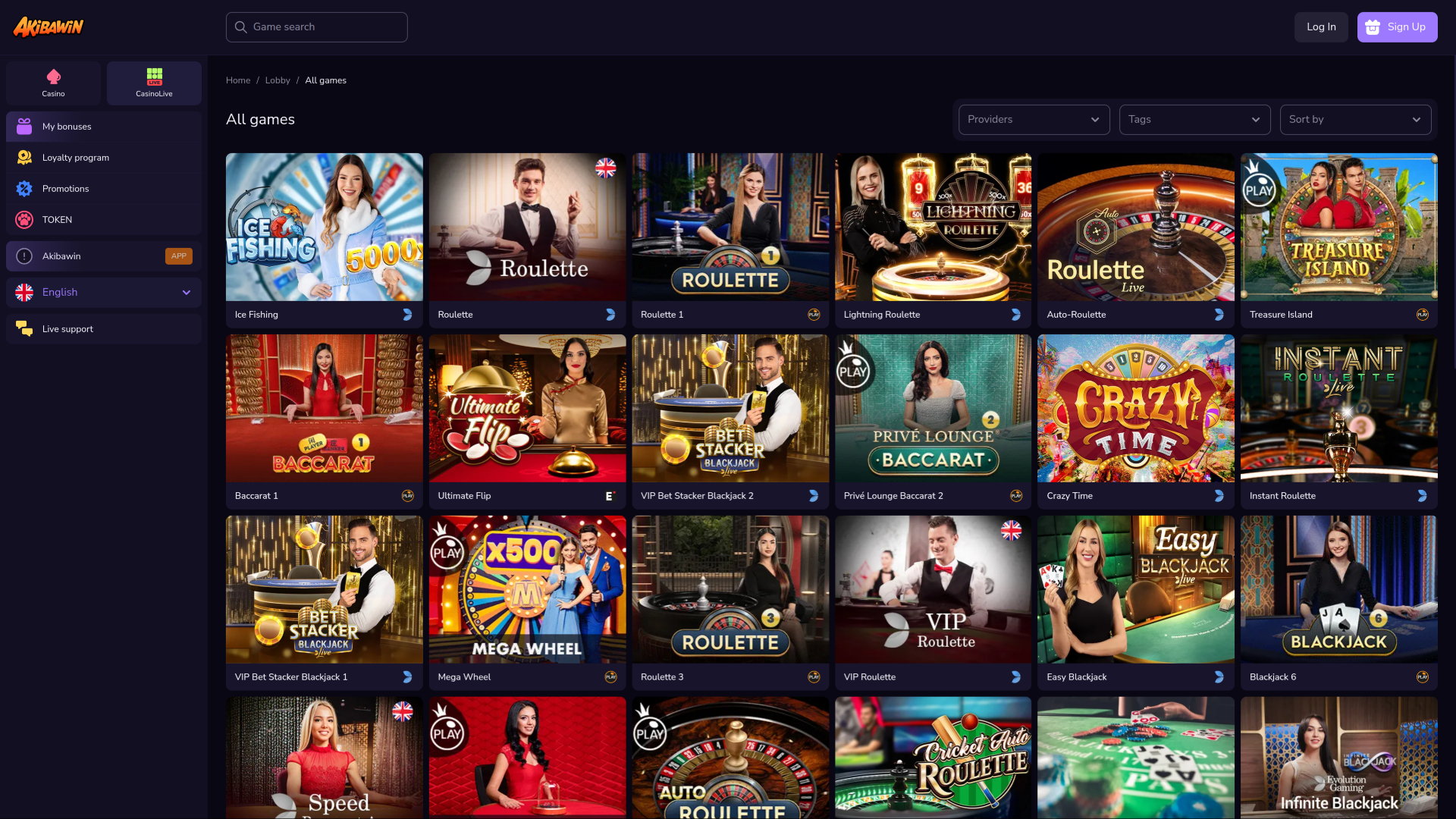
Live dealer games present a unique challenge because the lobby includes low-resolution video streams in the thumbnails. I spent an evening entirely in the live casino section, scrolling through roulette, blackjack, and game show tables. On my desktop, the video thumbnails commence playing only when they are entirely in the viewport and stop immediately as they scroll out. This preserves the main thread clear for smooth scrolling. I saw no dropped frames even with ten dealer streams displayed. When I tapped into a table, the page switched with a subtle slide animation, and the stream loaded in full quality. Returning to the lobby via the back button restored my exact scroll position, along with which thumbnails were playing. This state preservation is unusual and led me believe the site was viewing my session as a continuous experience rather than a series of disconnected page loads.
Navigating the Game Lobby: Continuous Scroll Under the Microscope
Load Limits and Placeholder Behaviour
The game lobby is where scrolling behavior determines the user experience. Yeti Casino uses an infinite scroll approach for its slots catalog, loading roughly 24 game thumbnails at a time. As I scroll down the list, a subtle spinner appears at the bottom for about 400 milliseconds before the next batch appears. I measured this using the browser’s developer tools, and the consistency stood out. There is no sudden stop where you think the list has finished, only to have more games load after an awkward pause. The threshold for triggering the next fetch is properly configured; I never had to reach the absolute bottom of the page. Placeholder cards with a soft grey shimmer occupy the space while images load, which prevents cumulative layout shift. On a desktop with a stable fibre connection, the experience feels almost native, akin to a well-made mobile app.
Search and Filter Impact on Scroll
One aspect I tested carefully was how using filters and search reset the scroll position. When I type a game title into the search bar, the infinite scroll list is substituted by a filtered result set that loads all matching games at once, no further scrolling needed. If I then clear the search, the lobby goes back to its previous scroll position, which is a huge usability win. Applying a provider filter, however, resets the scroll to the top and loads a fresh infinite list for that provider. I would have liked a smoother transition, but the behavior is predictable. The filter buttons themselves are sticky just below the main header, so I can change providers without scrolling back up. This small touch prevents dozens of unnecessary wheel rotations per session and keeps my focus on finding games rather than dealing with the interface.
How Scroll Behaviour Shapes Game Discovery
The manner in which a casino manages scroll has a direct effect on which games I wind up playing. Because Yeti Casino’s infinite scroll is quick and reliable, I often explore far more deeply into the catalogue than I would have on a paged site. The omission of a “load more” button takes away a decision point; I simply keep scrolling until something draws my gaze. This passive discovery has prompted me to try niche titles I otherwise would have ignored. Nevertheless, the infinite scroll also has a slight downside: it is tougher to recall where a specific game sits in the list. To make up for this, I depend heavily on the search and the persistent filter bar. Here are a few observations that sum up the influence on my game discovery habits:
- I scroll past around 80 to 100 game tiles before I start using the search bar, purely because the loading is so speedy and seamless.
- Provider filters become my primary navigation tool after the first minute, because they enable me to navigate to a known section without disrupting the scroll flow.
- The lack of pagination numbers means I never feel like I am “deep” in the catalogue, which reduces the impulse to head back and try a different category.
- On mobile, I often use the “back to top” button frequently after applying a filter, because the persistent filter bar is just outside thumb reach.
These actions are not something I intentionally adopted; they developed organically from the scroll mechanics. The design quietly pushes me toward more extensive exploration while still giving quick escapes via search. It strikes a balance that keeps sessions captivating without becoming too much.
Modifications and Fix for a Smoother Experience
Browser Specific Settings
While the site performs well out of the box, I tried with a few browser options to customize the scroll experience to my exact liking. On Chrome for Windows, I enabled the “smooth scrolling” flag, which added a subtle transition to wheel actions. This kept the infinite scroll in the game lobby become even more fluid, though it is not required. I also tested the site with Firefox’s default smooth scrolling, and the behaviour was stable. The site does not control the browser’s native scroll mechanics, which means any accessibility settings, such as reduced motion, are followed. For users reactive to motion, this is a significant plus.
Deactivating Smooth Scrolling in Firefox
If you want an instant, non-animated scroll, Firefox allows you to disable smooth scrolling in the options under “Browsing”. I used this for a day and found that the game lobby’s infinite scroll still operated well, but the page jumps appeared more abrupt. The sticky header’s snap was immediate, which some users might like for efficiency. Yeti Casino’s code does not fight this option; it simply adapts. That degree of consideration to user agent settings is a sign of thoughtful front-end engineering. I eventually turned smooth scrolling back on because the easing helps my eyes track new game tiles as they display, but the option is mine.
Using the Sticky Header and Quick Jump
Beyond browser tweaks, I found that the sticky header’s quick links are the fastest way to avoid scrolling altogether. The “Slots”, “Live Casino”, and “Table Games” links in the navigation bar act as anchor jumps that shift the page to the relevant section with a fluid animation. I began using these as my primary entry points during short sessions. The animation time is about 300 ms, which feels responsive without being distracting. On mobile, I figured out to click the Yeti Casino logo to instantly go back to the top, a common pattern that functions reliably. These small navigational shortcuts decrease my need on manual scrolling and make the overall impression appear more like a native app than a website.